Why Batch Cooking Is the Most Powerful Budget Habit
The average American spends $3,000–$5,000 per year on food outside the home — restaurants, takeout, and delivery. The primary driver isn't laziness or lack of cooking skills. It's the absence of a system.
When you come home at 6:30 PM after a long day, tired and hungry, the path of least resistance is Uber Eats. A $15 takeout order feels justified. But if there's a container of ready-to-eat food in your refrigerator, you'll eat that instead.
Batch cooking eliminates the decision. Two hours on Sunday creates a week of ready-to-eat food. The math is simple: 2 hours of cooking vs. $75–$150 in takeout orders. That's a $37–$75/hour return on your time.
The Batch Cooking System: 5 Core Components
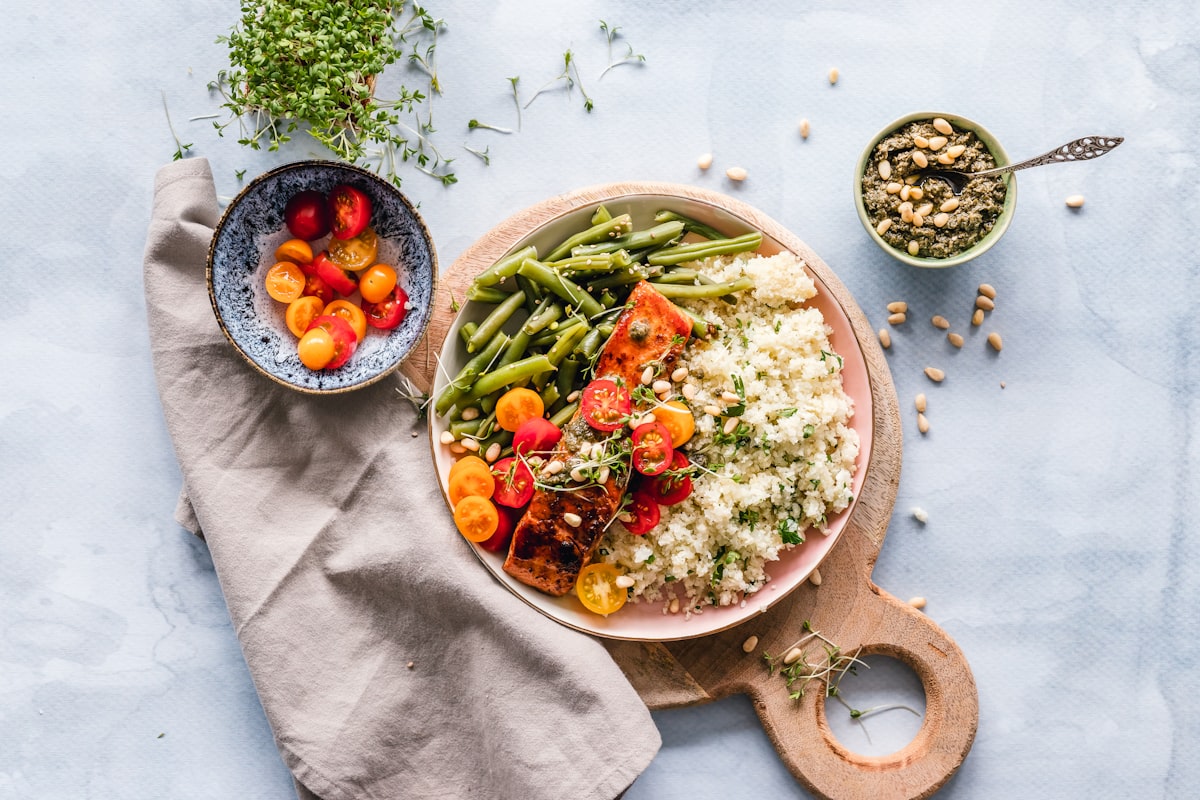
A complete batch cooking session produces 5 components that combine into dozens of different meals:
- A large grain (rice, farro, quinoa, or pasta)
- A large legume (beans, lentils, or chickpeas)
- A roasted vegetable medley (whatever's in season)
- A versatile protein (shredded chicken, ground beef, or hard-boiled eggs)
- A sauce or dressing (vinaigrette, tahini sauce, or tomato sauce)
These 5 components combine into 15–20 different meals throughout the week. Monday's grain bowl becomes Tuesday's burrito filling becomes Wednesday's soup base.
The 2-Hour Batch Cooking Timeline
Minutes 0–10: Setup and Preheat
- Preheat oven to 425°F (for roasting vegetables)
- Fill a large pot with water for grains (don't boil yet)
- Fill a second pot with water for beans (if using dried)
- Chop all vegetables at once (more efficient than chopping per recipe)
- Set out all containers for storage
Minutes 10–30: Start the Slow Components
Dried beans (if using): Rinse 2 cups dried beans, add to pot with 6 cups water, bring to boil, then simmer for 60–90 minutes. Or use Instant Pot: 25–30 minutes at high pressure.
Whole chicken or pork shoulder (if using): Season and put in slow cooker on low. It will be ready in 6–8 hours (start this before your batch cooking session, or use a rotisserie chicken).
Grains: Start your grain pot — brown rice takes 45 minutes, white rice 18 minutes, farro 30 minutes, quinoa 15 minutes.
Minutes 30–60: Roasting and Active Cooking
Roasted vegetables: Toss 2–3 sheet pans of vegetables with olive oil, salt, and pepper. Roast at 425°F for 25–30 minutes, rotating once. Use whatever's in season:
- Root vegetables (potatoes, carrots, beets): 30–35 minutes
- Cruciferous (broccoli, cauliflower, Brussels sprouts): 20–25 minutes
- Soft vegetables (zucchini, peppers, onions): 15–20 minutes
Ground beef or turkey: Brown 2 lbs in a large skillet. Season simply (salt, pepper, garlic). This becomes taco filling, pasta sauce base, or grain bowl protein.
Hard-boiled eggs: Cover 12 eggs with cold water, bring to boil, turn off heat, cover for 12 minutes. Transfer to ice bath. Peel and store.
Minutes 60–90: Sauce and Finishing
Tomato sauce: Sauté onion and garlic, add 2 cans crushed tomatoes, simmer 20 minutes. Season with Italian herbs. Makes 6–8 servings of pasta sauce.
Vinaigrette: Whisk 3 parts olive oil, 1 part vinegar, 1 tsp Dijon, salt and pepper. Makes enough for a week of salads.
Tahini sauce: Whisk tahini, lemon juice, garlic, water. Perfect for grain bowls, roasted vegetables, and falafel.
Minutes 90–120: Storage and Labeling
- Cool all food to room temperature before refrigerating (prevents condensation and bacterial growth)
- Store grains and legumes in airtight containers — 5 days in refrigerator
- Store roasted vegetables in containers — 4–5 days in refrigerator
- Store proteins in containers — 3–4 days in refrigerator
- Label everything with the date
- Freeze anything you won't use within 4 days
The Weekly Meal Matrix
With your 5 batch-cooked components, here's how to build a week of meals:
| Meal | Grain | Protein | Vegetable | Sauce |
|---|---|---|---|---|
| Monday dinner | Brown rice | Ground beef | Roasted broccoli | Tomato sauce |
| Tuesday lunch | Farro | Hard-boiled egg | Roasted carrots | Vinaigrette |
| Tuesday dinner | Brown rice | Shredded chicken | Roasted peppers | Tahini |
| Wednesday lunch | — | Black beans | Roasted vegetables | Vinaigrette |
| Wednesday dinner | Pasta | Ground beef | Roasted zucchini | Tomato sauce |
| Thursday lunch | Brown rice | Hard-boiled egg | Roasted broccoli | Tahini |
| Thursday dinner | Farro | Shredded chicken | Roasted carrots | Vinaigrette |
| Friday lunch | — | Black beans | Roasted vegetables | Tomato sauce |
Cost per meal: $2.50–$4.00 for a generous serving.
The 5 Best Foods to Batch Cook
1. Brown Rice (or Any Whole Grain)
Why: Stores 5 days, reheats perfectly, base for dozens of meals
Quantity: Cook 3–4 cups dry (yields 6–8 cups cooked)
Storage: Airtight container, refrigerator, 5 days
2. Dried Beans or Lentils
Why: Cheapest protein source, stores well, versatile
Quantity: Cook 2 cups dried (yields 5–6 cups cooked)
Storage: With cooking liquid, refrigerator, 5 days; or freeze in 1-cup portions
3. Roasted Vegetables
Why: Transforms cheap vegetables into delicious food, works in everything
Quantity: 3–4 sheet pans (fills refrigerator)
Storage: Airtight container, refrigerator, 4–5 days
4. Shredded Chicken
Why: Versatile protein for tacos, salads, soups, grain bowls
Quantity: 1 whole chicken or 3 lbs bone-in thighs
Storage: Airtight container, refrigerator, 3–4 days
5. Hard-Boiled Eggs
Why: Instant protein, portable, works in salads and grain bowls
Quantity: 12 eggs
Storage: Unpeeled in refrigerator, 1 week; peeled in water, 5 days
Container Strategy: What to Buy
The right containers make batch cooking work. You need:
- 4–6 large containers (4–6 cup): For grains, beans, roasted vegetables
- 4–6 medium containers (2–3 cup): For proteins, sauces
- 8–10 small containers (1 cup): For individual portions, dressings
- Freezer bags: For anything going to the freezer
Best value containers: OXO Good Grips or Rubbermaid Brilliance. Both are leak-proof, stackable, and microwave-safe. A set of 10 costs $25–$40 and lasts years.
Advanced Batch Cooking: The Freezer Strategy
Your freezer is a force multiplier for batch cooking. When you make a large batch of something, freeze half:
Freeze well:
- Cooked beans and lentils (in 1-cup portions)
- Cooked grains (in 2-cup portions)
- Tomato sauce (in 2-cup portions)
- Shredded meat (in 1-cup portions)
- Soups and stews (in single-serving portions)
- Banana bread, muffins, and baked goods
Don't freeze:
- Cooked rice (texture degrades)
- Roasted vegetables (become mushy)
- Salad greens
- Dairy-based sauces
A well-stocked freezer means you always have the components for a meal, even when you haven't batch cooked recently.
Frequently Asked Questions
Q: How long does batch-cooked food last in the refrigerator?
A: Cooked grains and legumes: 5 days. Cooked vegetables: 4–5 days. Cooked proteins: 3–4 days. Sauces: 5–7 days. When in doubt, smell it — if it smells off, discard it.
Q: Can I batch cook if I live alone?
A: Absolutely — scale down quantities by half. A single person can batch cook for a full week in 60–90 minutes. The freezer becomes especially important for solo batch cooking.
Q: What if I don't have 2 hours on Sunday?
A: Even 45 minutes of batch cooking (just grains and one protein) dramatically reduces weeknight cooking time. Start small and build the habit.
Q: How do I prevent batch-cooked food from getting boring?
A: The key is varying the sauces and seasonings. The same rice and beans can become Mexican (cumin, lime, cilantro), Mediterranean (lemon, olive oil, herbs), or Asian (soy sauce, ginger, sesame) with different flavorings.
Q: Is batch cooking safe? Can food go bad?
A: Yes, if you follow food safety guidelines: cool food before refrigerating, store in airtight containers, label with dates, and use within the timeframes above. Never leave cooked food at room temperature for more than 2 hours.
Q: What's the best grain to start with?
A: Brown rice is the most versatile and forgiving. It reheats well, works in almost every cuisine, and is inexpensive. Start with brown rice and expand from there.
Q: Can I batch cook with a slow cooker?
A: Yes — the slow cooker is ideal for proteins (pulled pork, shredded chicken, beans). Start it in the morning and it's ready by evening. Combine with oven roasting for a complete batch cooking session.
Q: How do I reheat batch-cooked food without drying it out?
A: Add a splash of water or broth before microwaving. Cover loosely with a damp paper towel. For grains, add 1–2 tablespoons of water per cup and microwave covered for 2 minutes.