The Right Oven Temperature for Perfect Baked Potatoes Every Time
Baked potatoes are one of the greatest budget meals on earth. A single russet potato costs about $0.50, fills you up like a champ, and can be dressed up a hundred different ways — from a simple pat of butter to a full loaded situation with cheese, sour cream, and whatever leftovers you've got. But here's the thing: most people are baking them at the wrong temperature, and that's why they end up with sad, soft-skinned, unevenly cooked potatoes that feel more like a disappointment than a dinner.
Let's fix that. Clara here, and today we're talking about the one variable that makes or breaks a baked potato: oven temperature.
Table of Contents
- Why Temperature Matters More Than You Think
- The Best Temperature for Baked Potatoes: 400°F vs 425°F
- How Long to Bake a Potato at Each Temperature
- The Convection Oven Rule
- The 5-Step Method for a Perfect Baked Potato Every Time
- Budget Toppings That Make It a Meal
- Common Baked Potato Mistakes (and How to Avoid Them)
- Frequently Asked Questions
Why Temperature Matters More Than You Think {#why-temperature-matters}
A baked potato has two goals: a fluffy, steamy interior and a crispy, salty skin you actually want to eat. Achieving both at the same time requires heat that's high enough to drive steam through the flesh while also crisping the outside — and that's where most home cooks go wrong.
Too low (325°F or below) and you get a soft, almost steamed potato. The skin stays pale and chewy, and the inside, while cooked through, lacks that signature light-and-airy texture. Too high (475°F+) and the skin can char before the center is fully cooked, especially with larger potatoes.
The sweet spot lives between 400°F and 425°F, and which end of that range you choose depends on your timeline and your oven.
The Best Temperature for Baked Potatoes: 400°F vs 425°F {#best-temperature}
Here's the honest breakdown:
| Temperature | Result | Best For |
|---|---|---|
| 400°F | Perfectly fluffy inside, lightly crisp skin | Most situations; forgiving timing |
| 425°F | Crispier skin, slightly faster cook | When you want maximum skin texture |
| 375°F | Softer skin, very fluffy inside | Convection ovens; gentler cook |
| 450°F | Very crispy skin, faster cook | Small potatoes; experienced bakers |
The Penny-Wise Palate recommendation: 400°F. It's the most forgiving temperature — if you get distracted by a toddler or a phone call and the potato stays in an extra 10 minutes, you're fine. At 425°F, that same distraction can mean an over-browned skin.
That said, if you're specifically after that restaurant-style shatteringly crispy skin, 425°F is your move. Just set a timer.
How Long to Bake a Potato at Each Temperature {#how-long}
Timing depends on the size of your potato. Always use a fork or skewer to test — it should slide in with zero resistance when done.
| Potato Size | 400°F | 425°F |
|---|---|---|
| Small (4–5 oz) | 45–50 min | 35–40 min |
| Medium (6–8 oz) | 55–65 min | 45–55 min |
| Large (10–12 oz) | 70–80 min | 60–70 min |
Pro tip: Russet potatoes are the gold standard for baking. Their high starch content gives you that fluffy, almost mealy interior. Yukon Golds work too and have a naturally buttery flavor, but they're denser. Red potatoes are better for roasting — skip them here.
The Convection Oven Rule {#convection}
If your oven has a convection setting (the one with the fan), drop the temperature by 25°F. Convection circulates hot air more aggressively, which means your potato cooks faster and the skin browns more quickly. So:
- Standard recipe calls for 400°F → use 375°F convection
- Standard recipe calls for 425°F → use 400°F convection
Reduce the cook time by about 10–15 minutes as well, and start checking earlier than you normally would.
The 5-Step Method for a Perfect Baked Potato Every Time {#5-step-method}
This is the method I've used for years. It's simple, it's cheap, and it works every single time.
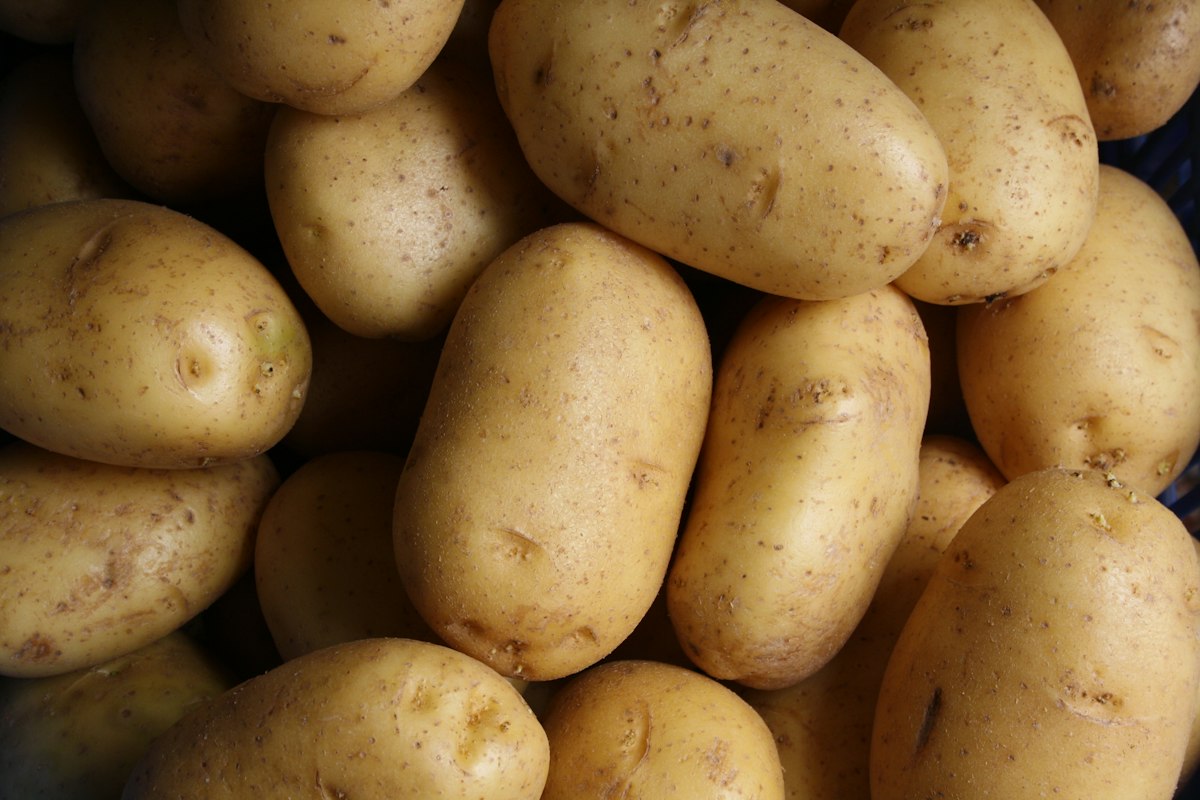
Step 1: Choose the right potato. Go for a large russet, sometimes labeled "Idaho potato." Look for ones that are roughly uniform in size so they cook evenly. Avoid any with green patches, soft spots, or sprouts.
Step 2: Scrub and dry thoroughly. Rinse under cold water and scrub with a vegetable brush or the rough side of a sponge. Then pat completely dry with a paper towel. Moisture on the skin is the enemy of crispiness.
Step 3: Oil and salt the skin. Rub each potato all over with about a teaspoon of neutral oil (vegetable, canola, or olive oil all work). Then sprinkle generously with kosher salt — more than you think you need. The salt draws out surface moisture and seasons the skin as it crisps.
Step 4: Pierce and place directly on the rack. Use a fork to poke 8–10 holes all over the potato. This lets steam escape so the potato doesn't burst (yes, that can happen). Place directly on the oven rack — not on a baking sheet — so hot air circulates all the way around.
Step 5: Bake at 400°F until a fork slides in with zero resistance. For a medium russet, that's about 60 minutes. Don't rush it. An underdone baked potato is a tragedy.
Budget Toppings That Make It a Meal {#budget-toppings}
A baked potato is a blank canvas, and the toppings are where the budget magic happens. Here are some combinations that turn a $0.50 potato into a full, satisfying dinner for under $2 per person:
The Classic ($0.80/serving): Butter, salt, pepper, and a dollop of sour cream. That's it. Don't overthink it.
The Loaded Budget Version ($1.50/serving): Shredded cheddar (buy the block and grate it yourself — it melts better and costs less), sour cream, and canned chili. A can of store-brand chili runs about $1.20 and tops two potatoes easily.
The Leftover Remix ($1.20/serving): Whatever protein you have leftover from earlier in the week — rotisserie chicken, ground beef, pulled pork — plus cheese and whatever vegetables are in the fridge. This is the baked potato's greatest superpower: it makes leftovers feel intentional.
The Broccoli Cheddar ($1.40/serving): Steam a cup of frozen broccoli, pile it on, cover with shredded cheddar, and microwave for 30 seconds to melt. Tastes like a restaurant side dish for pennies.
The Breakfast Potato ($1.10/serving): Top with a fried egg, a sprinkle of cheese, and hot sauce. Dinner for breakfast, or breakfast for dinner — either way, it's a win.
Common Baked Potato Mistakes (and How to Avoid Them) {#mistakes}
Wrapping in foil. This is the most common mistake. Foil traps steam, which softens the skin and essentially steams the potato instead of baking it. You'll get a soft, pale skin that tears instead of crisps. Skip the foil entirely.
Baking on a sheet pan without a rack. The bottom of the potato sits in its own steam and never crisps. If you must use a sheet pan, place the potatoes on a wire rack set inside the pan.
Not piercing the skin. Steam builds up inside as the potato cooks. Without holes to escape, that pressure can cause the potato to split or even burst in the oven. Eight to ten fork pokes takes five seconds and saves a mess.
Undercooking. A baked potato that isn't fully cooked through has a dense, gluey center instead of a fluffy one. Always test with a fork or skewer — it should slide in with zero resistance. If there's any pushback, give it another 10 minutes.
Skipping the oil and salt. The oil conducts heat to the skin and helps it crisp. The salt draws out surface moisture and seasons the skin. Both are non-negotiable for a great baked potato.
Frequently Asked Questions {#faq}
Q: Can I bake potatoes ahead of time and reheat them?
Yes. Bake them fully, let them cool, then refrigerate for up to 4 days. To reheat, place in a 350°F oven for 15–20 minutes, or microwave on high for 2–3 minutes. The skin won't be as crispy after refrigeration, but the flavor is still great.
Q: Can I microwave a baked potato instead of using the oven?
You can, and it's much faster (about 5 minutes on high, flipping halfway through). The texture is different — the skin stays soft and the inside is denser. For a quick weeknight dinner it works fine. For the full crispy-skin experience, the oven is worth the time.
Q: What's the internal temperature of a fully cooked baked potato?
A baked potato is done when its internal temperature reaches 210°F. If you have an instant-read thermometer, this is the most reliable way to check. Otherwise, the fork test works just as well.
Q: Should I bake potatoes in foil or not?
Not. See the mistakes section above. Foil = steamed potato, not baked potato. Skip it.
Q: How do I get the skin extra crispy?
Three things: dry the potato completely before oiling, use enough salt, and bake at 425°F instead of 400°F. Some people also rub the skin with butter instead of oil for extra browning — it works, but oil is cheaper.
Q: Can I bake sweet potatoes the same way?
Yes, with one adjustment: sweet potatoes have more sugar and can caramelize (or burn) faster. Bake at 400°F and check at 45 minutes. They're done when a fork slides in easily and the skin looks slightly puffed.
Q: What's the cheapest way to make baked potatoes a full meal?
Canned chili on top. A $1.20 can of store-brand chili covers two potatoes, adds protein and fiber, and tastes genuinely good. Add shredded cheese if you have it. Total cost: under $1.50 per serving.
Q: How many potatoes can I bake at once?
As many as fit on your oven rack with at least an inch of space between them. Crowding slows cooking and prevents even browning. If you're baking more than 4–5 large potatoes, use two racks and rotate them halfway through.
The Bottom Line
The best temperature for baked potatoes is 400°F for most situations, or 425°F when you want maximum crispiness. Use a russet, dry it completely, oil and salt the skin generously, skip the foil, and bake directly on the rack. A medium potato takes about 60 minutes at 400°F — test with a fork, not a timer.
And when it comes to toppings, remember: a baked potato is one of the most budget-friendly blank canvases in your kitchen. Dress it up with whatever you have, and you've got a satisfying meal for under $2 a person.
That's the Penny-Wise way.
Clara Pennington is the founder of The Penny-Wise Palate and the author of The $50 Weekly Grocery Playbook. She writes about budget cooking, grocery strategy, and making every dollar stretch further.